Understanding California DUI Penalties: What You Need to Know
Facing a DUI in California: More Than a Ticket
You never expect to see the flashing lights in your rearview mirror. But when it happens, and the officer asks you to step out of the car, the night can change in an instant. A DUI arrest in California is not a minor inconvenience. It sets off a chain of events that touches your wallet, your freedom, and your daily routine. The state treats driving under the influence with serious weight, and the consequences can follow you for years.
Most people assume a first-time DUI means a fine and maybe a class. That is only part of the story. The actual penalties depend on your blood alcohol content, whether anyone was hurt, your driving history, and how cooperative you were during the stop. Even a straightforward case can involve two separate legal tracks: the criminal court case and the DMV administrative action. Both can move at the same time, and both can affect your license.
The Criminal Side: What a Conviction Looks Like
In California, most first and second DUIs are charged as misdemeanors. A standard first offense with no injuries and a BAC under 0.15 percent carries up to six months in county jail, though most people serve no time if they complete probation. You will face fines and penalty assessments that can push the total cost well beyond the base fine. The court can also order you to install an ignition interlock device on your vehicle, attend a DUI school, and complete community service.
For a second DUI, the stakes climb. The mandatory minimum jail sentence is 96 hours, but many counties impose more. Your license will be suspended for two years, though you may qualify for a restricted license after a period. The court will likely require a longer DUI school program and a longer ignition interlock device requirement. Probation becomes stricter, with random testing and check-ins.
When you have a prior conviction for DUI within ten years, the system treats you as a repeat offender. That prior conviction can be from a wet reckless, which is often negotiated as a lesser charge, or from an out-of-state DUI. The court looks at the whole record, and the margin for error shrinks significantly.

When a DUI Becomes a Felony
A DUI can escalate to a felony DUI in several situations. If someone else suffers bodily injury, even if it was an accident, the charge can be filed as a felony. A fourth DUI within ten years is also a felony in California, regardless of injury. Felony convictions carry state prison sentences, which can range from 16 months to three years or more, depending on the specifics. You also face fines up to $1,000 plus assessments, and your license revocation can last four years or longer.
Sentencing enhancements can add even more time. If you had a BAC of 0.15 percent or higher, or if you refused a chemical test, the penalties increase. Refusing the test triggers a separate DMV action that adds a one-year license suspension on top of any court penalty. That refusal can also be used against you in court, though the law changed in 2016 to remove the criminal enhancement for refusal alone.
The line between misdemeanor and felony is not always clear at the scene. A skilled DUI attorney can examine the evidence, challenge the traffic stop, and question the reliability of field sobriety test results or the blood alcohol content reading. Sometimes a felony can be reduced to a misdemeanor, or a charge can be dismissed entirely if the officer made a mistake.
The DMV Side: Your License Is on the Line
Separate from the criminal case, the DMV runs its own administrative process. Under California Vehicle Code, the DMV can suspend your license even if the court case is still pending. You have only ten days from the date of arrest to request a hearing with the DMV. Miss that window, and your license will be suspended automatically.
At the DMV hearing, the officer does not need to prove guilt beyond a reasonable doubt. The standard is lower, and the hearing officer often relies on the arrest report. That is why it is critical to act fast. An attorney can often negotiate a restricted license that lets you drive to work, school, or DUI school during the suspension period. Without that, you may be left without legal driving options.
You will also be required to file an SR-22 insurance certificate with the DMV. This proves you carry the minimum liability coverage, and it must stay in effect for three years. If your policy lapses, the DMV can suspend your license again. The insurance company will likely raise your rates substantially, and some insurers will drop you altogether.
Probation, DUI Court, and Other Conditions
Most DUI convictions come with informal probation, usually three to five years. During that time, you must obey all laws, submit to warrantless searches if ordered, and complete any court-ordered programs. You will also pay probation supervision fees, and any new arrest can trigger a violation that lands you in jail.
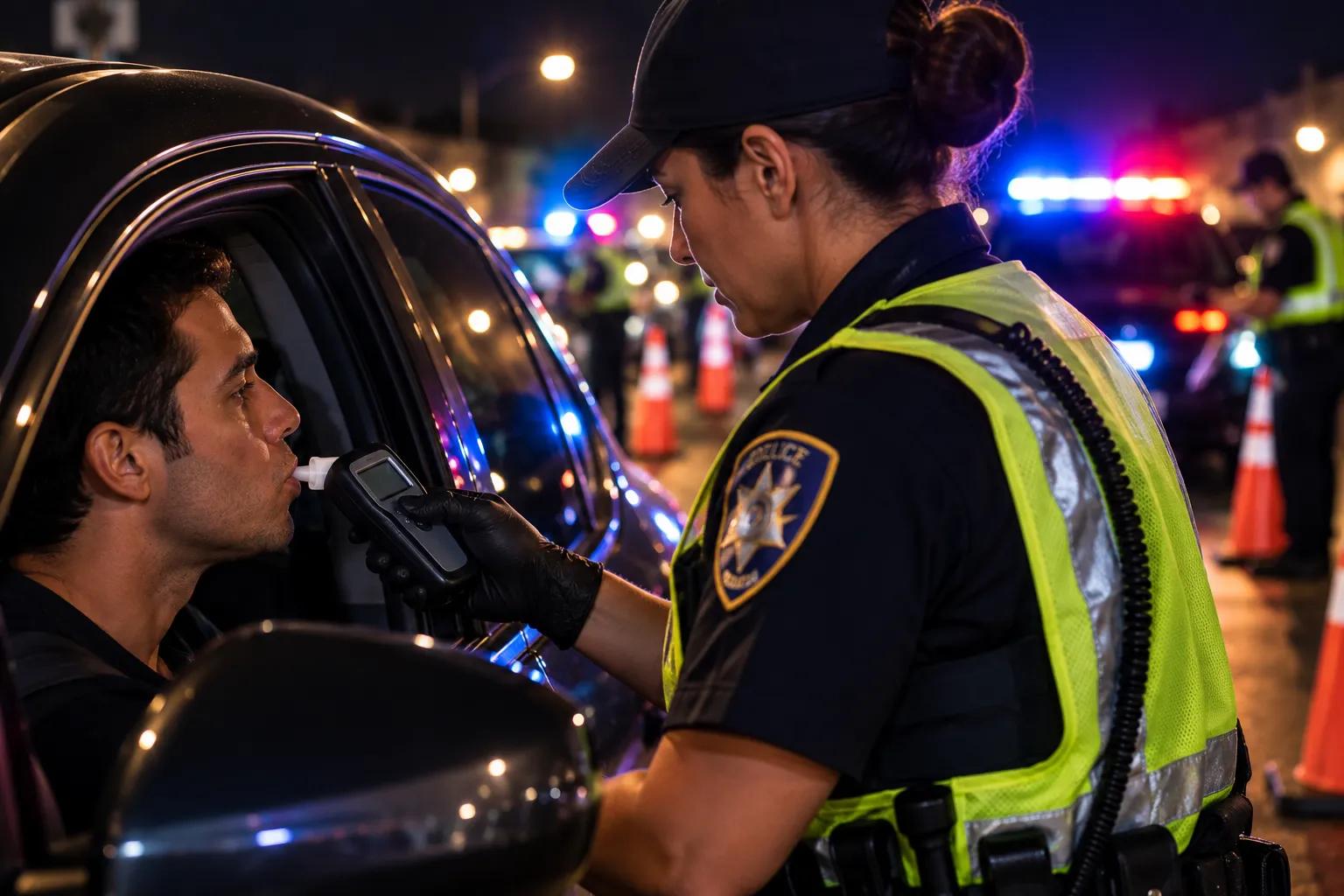
For some repeat offenders, the court may assign you to DUI court, a specialized program that involves frequent appearances, strict testing, and close monitoring. DUI court is not available everywhere, and participation is often voluntary, but it can lead to reduced charges or shorter sentences. It is demanding, though, and not everyone completes it.
The ignition interlock device is another condition that often comes up. For first and second offenders, the court may require one for a period ranging from six months to two years. You pay for installation and monthly rental, and you must blow into the device before starting the car. If you fail the test, the car does not start, and the device logs the failure for the court to see.
Long-Term Consequences Beyond the Courtroom
The financial impact of a DUI goes far beyond fines. Between attorney fees, DUI school, the interlock device, increased insurance, and lost wages from court appearances, a first DUI can easily cost $15,000 or more. That is a heavy price for a single mistake.
Your career can suffer too. Certain jobs require a clean driving record, and a DUI conviction can disqualify you from positions that involve driving or commercial licenses. Professional licenses in fields like nursing, teaching, or law may also be affected, though each board makes its own decision.
And the record does not disappear on its own. A DUI stays on your criminal record indefinitely, though you may be eligible for expungement after completing probation. An expungement does not erase the arrest or the DMV action, but it can help with employment and housing applications. The process requires a court petition, and you must meet specific criteria.
How a DUI Attorney Can Change the Outcome
Because the stakes are so high, having experienced criminal defense counsel matters. A DUI attorney can challenge the legality of a sobriety checkpoint, attack the calibration of the breathalyzer, or argue that the officer lacked reasonable suspicion for the stop. They can also negotiate with the prosecutor for a plea to a lesser charge, like a wet reckless, which carries lighter penalties.
They can also guide you through the DMV hearing, often the most time-sensitive part of the case. Missing the ten-day deadline is a common and costly mistake. An attorney can file the request immediately and build a strategy to preserve your driving privileges.

Most importantly, a lawyer can look at the whole picture and advise you on whether fighting the case or accepting a deal is in your best interest. Every case is different. A first-time offender with a low BAC might do better with a negotiated plea that avoids the harshest penalties, while someone facing a felony DUI needs to fight hard to avoid prison.
Understanding california dui penalties is the first step toward protecting yourself. The laws are complex, and the consequences are not just financial. They affect your freedom, your job, and your future. If you are arrested, you need to act quickly and think strategically. The right defense can make a real difference, but only if you get it in time.
No one plans to get a DUI. But knowing what you are up against, and having the right help on your side, can keep a bad night from ruining your life.